Graphene Battery
vs Lithium
Battery: Which Is Better?
Compare safety, cycle life, charge time, efficiency, maintenance, and total cost of ownership for commercial and industrial energy storage.
Get yoursGraphene Battery vs Lithium-Ion Battery: Key Differences
| Feature | Graphene | Lithium |
|---|---|---|
| Warranty | 15 Years | 10 Years ("Limited cycles") |
| Cycles | 500,000 | 2,800 - 10,000 |
| Life Expectancy | 30 Years + | 3 - 8 Years |
| Depth of Discharge | 100% | 70 - 80% |
| Thermal Risk Runaway | No fire or overheating risk | High risk of fire or explosion; Insurance & safety risk |
| Charge Time | 10 minutes | Multiple hours |
| Technology | Solid state electrostatic capacitor | Lithium chemical liquid battery |
| Round Trip Efficiency | 98% | 80 - 90% |
| Cost of Ownership | No replacements, lifetime expectations | Frequent replacements, high operating expenses |
| Sustainability | 99% recyclable (from tires & plastics) | Mining toxic to the environment |
| Maintenance | Minimal, no HVAC, no fire suppression, no chemical degradation | High requirements: cooling, fire suppression, degradation |
| Safe Operating Temp | -25ºF to 140ºF | 33ºF to 120ºF |
Lithium-Ion Battery Safety and Thermal Management
Lithium-ion batteries are widely used in commercial energy storage, but system design must account for temperature control, battery monitoring, protection systems, operating conditions, and site-specific fire-safety requirements. Under certain fault, damage, or overheating conditions, lithium-ion cells can be susceptible to thermal runaway.
For commercial and industrial buyers, the comparison should therefore consider more than energy capacity alone. Battery chemistry, enclosure design, cooling requirements, monitoring systems, maintenance, operating temperature, duty cycle, and site safety requirements all affect how a lithium-ion storage system performs over its service life.
How Graphene-Based Storage Changes the Safety Profile
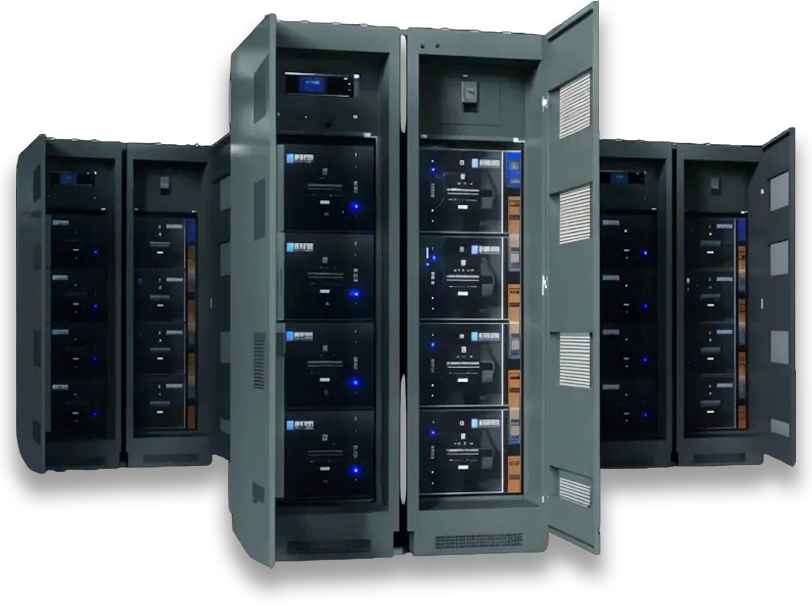
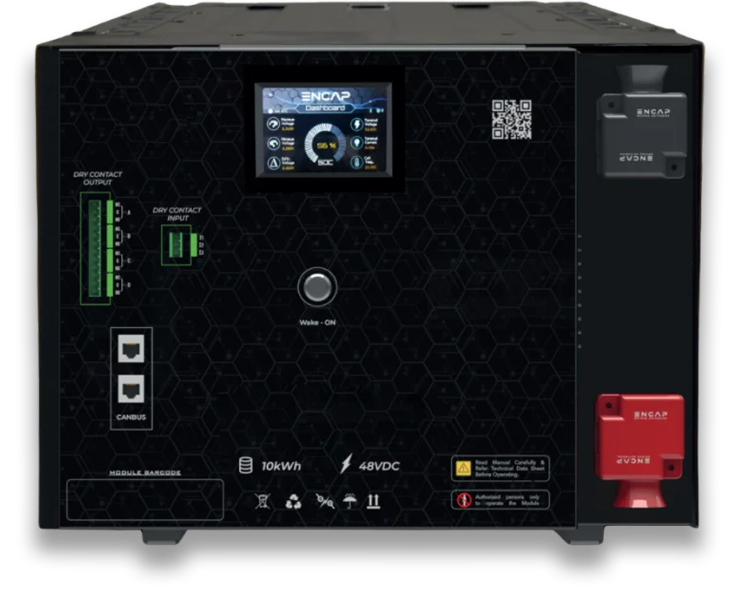
Graphene Power Storage uses a solid-state electrostatic architecture rather than a conventional liquid-electrolyte lithium-ion design. According to the company's published system specifications, the technology is designed to operate without thermal runaway while reducing the cooling and thermal-management requirements associated with conventional battery systems.
For data centers, industrial facilities, telecom infrastructure, and other mission-critical environments, these characteristics can simplify the way energy storage is planned around space, cooling, frequent cycling, and operational resilience. Businesses evaluating critical infrastructure backup should compare the complete storage architecture, not battery chemistry alone.


Cycle Life, Degradation and Warranty: Graphene vs Lithium-Ion
Battery degradation directly affects usable capacity, replacement planning, maintenance costs, and total cost of ownership. This makes cycle life one of the most important factors when comparing a graphene battery vs lithium battery for high-use commercial applications.
Graphene Power Storage's published specifications list more than 500,000 charge cycles and a 15-year warranty for its storage technology. Conventional lithium-ion systems can experience capacity fade over time, with actual cycle life depending on chemistry, operating temperature, depth of discharge, charge rate, and usage conditions.
Graphene Storage
- Zero Chemical Degradation over time
- 500,000+ charge cycles
- 15-Year Warranty – Lifetime expectations
- Maintains 98% efficiency even after decades
Graphene's solid-state design means no loss in performance and no replacement headaches—saving you time, money, and frustration.
Lithium-Based Systems
- Degrade rapidly after a few years
- Just 2,800–10,000 cycles
- 3–8 year lifespan, 10-year limited warranty
- Requires costly replacements and maintenance
Decreasing capacity over time means you're paying more, while getting less.


Graphene vs Lithium-Ion for Commercial and Industrial Energy Storage
Commercial energy-storage systems may need to support very different loads, from CNC machinery and HVAC equipment to electric forklifts, data centers, telecom infrastructure, and facility-wide peak demand. Choosing between graphene-based storage and lithium-ion therefore requires matching the storage architecture to the actual operating profile.
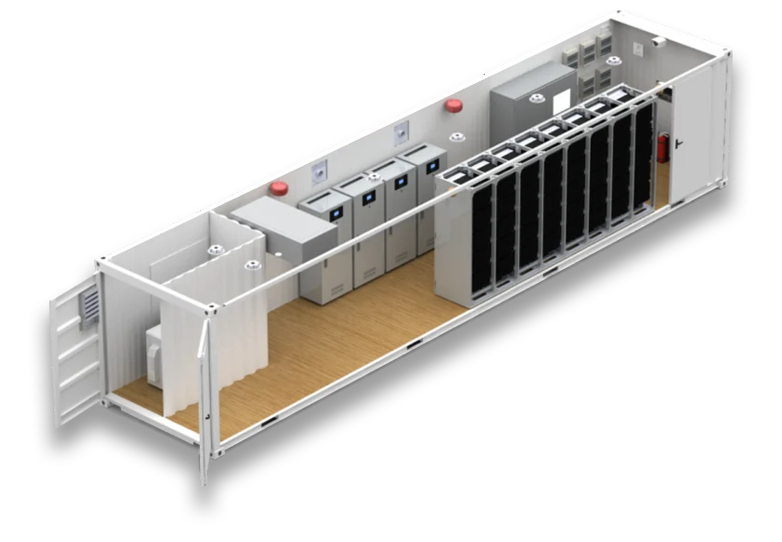
Graphene Power Storage's systems are designed for frequent cycling, high-power response, long-duration applications, backup power, and commercial peak management. Larger projects that require centralized storage can evaluate grid-scale energy storage, while facilities with extended discharge requirements can consider modular long-duration storage based on their load profile and resilience goals.
For businesses, the best system is the one that meets required power, duration, footprint, cycling, integration, safety, and lifecycle-cost requirements without adding unnecessary operational complexity.
Graphene power storage solutions